
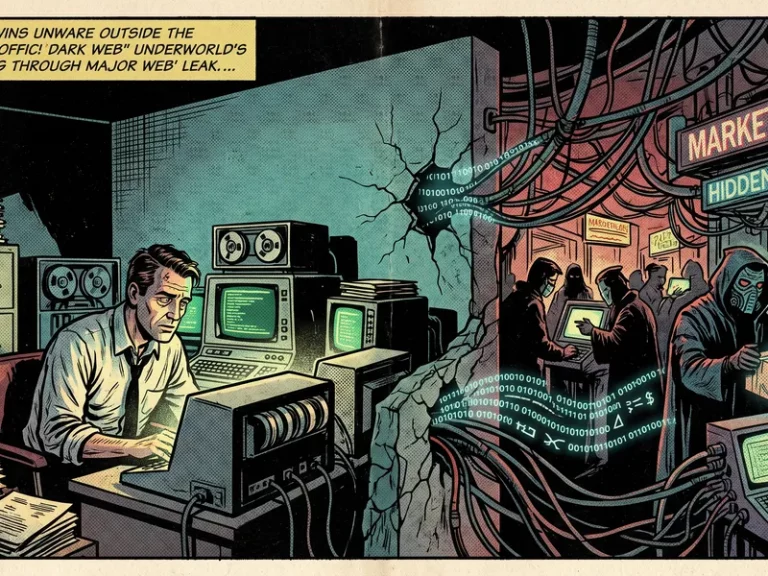
Most organizations focus on protecting what they can see: networks, endpoints, cloud systems, and internal data flows. But today, some of the most critical risks exist outside that visibility. Long before a breach becomes visible internally, traces of it often appear elsewhere. Credentials are shared, data is traded, and discussions take place in spaces that most organizations never monitor. This is where the challenge begins.
The Blind Spot Beyond Your Security Tools
Traditional security tools are designed to monitor internal environments. They detect suspicious activity, block unauthorized access, and generate alerts when something goes wrong. But they do not always provide insight into what happens after data leaves the organization.
If credentials are exposed, if sensitive information is leaked, or if attackers begin discussing a target, these signals often appear in external environments, particularly in areas of the internet that are not indexed or easily accessible. Without visibility into these spaces, organizations may not realize they are at risk until it is too late.
The Dark Web as an Early Signal
The dark web is often associated with anonymity, but from a security perspective, it also serves as a source of early warning signals. Information that appears there is rarely random. It may indicate that data has been compromised, access is being shared, or a target is being evaluated. These signals can include exposed credentials, leaked corporate information, or discussions related to potential attacks. The key value is timing. Detecting these signals early can provide organizations with a critical window to respond before the risk escalates.
From Exposure to Impact
When data appears on the dark web, the risk is no longer theoretical. It becomes actionable for threat actors. Credentials can be used to access systems. Sensitive information can be leveraged for further attacks. Even partial data can provide insights that help attackers build more targeted strategies. What makes this more challenging is that these activities often happen quietly. There are no immediate alerts within internal systems, and no obvious signs that something is wrong. By the time the impact is visible, the damage may already be done.
Why Monitoring Needs to Go Beyond the Surface
In a connected digital environment, risk is not confined to internal systems. It extends to wherever data can travel, and that includes external and hidden spaces. Monitoring these areas is no longer optional. It is part of understanding the full scope of an organization’s security posture. Advanced dark web monitoring provides visibility to these otherwise hidden risks. It allows organizations to track exposure, identify threats earlier, and respond more effectively.
Turning External Signals into Action
The value of dark web monitoring is not just in collecting information, but in making it actionable. Organizations need to understand what the data means, how it relates to their environment, and what steps should be taken next. This may involve resetting credentials, strengthening access controls, or investigating potential breaches. By connecting external signals with internal response, organizations can close the gap between awareness and action.
A Smarter Way to Monitor What You Can’t See
Cyber threats do not always start within your network. In many cases, they begin quietly in places you are not watching. Gaining visibility into these areas changes how organizations approach security. It shifts the focus from reacting to incidents to anticipating them.
Solutions like SOCRadar Advanced Dark Web Monitoring help organizations uncover risks that exist beyond traditional visibility. By identifying exposed data, tracking emerging threats, and providing early insights, businesses can respond before issues escalate.
With support from Terrabyte, organizations can extend their security beyond internal systems, ensuring that risks are identified not only where they happen, but where they begin.