
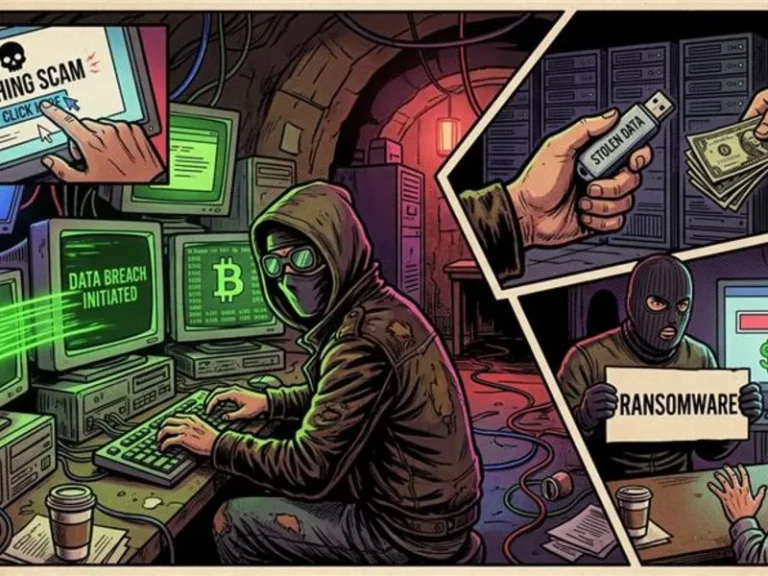
Cybercrime is often viewed through technical lenses, such as malware, exploits, and system vulnerabilities. But behind every attack is a clear objective: profit. As discussed in “Black Hat Hackers Explained: Inside the Underground Cybercrime Ecosystem”, modern black hat hackers operate in structured and coordinated environments. What drives this evolution is not just capability, but economics. Today, cybercrime functions less like isolated activity and more like a business model.
From Attacks to Revenue Streams
Black hat hackers no longer rely on one-off successes. Instead, they build repeatable ways to generate income. Cyberattacks are planned not just for impact, but for return. Different methods are used depending on the target, the type of data available, and the potential value. Some attacks are designed for immediate financial gain, while others focus on collecting assets that can be monetized over time. This shift turns cybercrime into a sustainable operation rather than a series of random events.
Data as a Valuable Commodity
One of the most important drivers of cybercrime is the value of data. Sensitive information, such as personal details, financial records, and corporate data, can be sold, reused, or leveraged in multiple ways. Unlike physical assets, data can be duplicated and distributed without losing its value. This makes it particularly attractive in underground markets. Once obtained, the same dataset can be sold multiple times or used for different purposes, increasing its overall profitability.
Ransom as a Direct Monetization Strategy
Ransom-based attacks have become one of the most visible forms of cybercrime. Instead of selling stolen data, attackers demand payment directly from victims in exchange for restoring access or preventing exposure. This approach simplifies the monetization process. It removes the need for intermediaries and allows attackers to generate revenue quickly. The effectiveness of this model has led to its widespread adoption, making it a key component of modern cybercrime.
Access as a Product
In many cases, the initial breach is not the end goal, but a product. Attackers who gain access to systems may choose to sell that access to other parties. This creates a layered ecosystem where different actors specialize in different stages of an attack. Access to corporate environments, cloud platforms, or user accounts can be highly valuable, especially if it enables further exploitation. By selling access rather than using it directly, attackers can generate income while reducing their own exposure.
Scaling Through Reuse and Automation
What makes cybercrime particularly efficient is its ability to scale. Once a method is proven effective, it can be reused across multiple targets. Automation plays a key role in this process. Tasks that require manual effort can now be executed repeatedly with minimal involvement. This allows attackers to target more organizations in less time, increasing their chances of success. The result is a model that resembles legitimate business operations, where efficiency and scalability drive growth.
Why This Model Continues to Grow
The financial incentives behind cybercrime ensure its continued expansion. As long as there is value in data, access, and disruption, attackers will find ways to exploit it. At the same time, the barriers to entry have decreased. Tools, resources, and knowledge are more accessible than ever, allowing more individuals to participate in cybercriminal activities. This combination of high reward and lower barriers creates an environment where cybercrime can thrive.
Looking Beyond the Attack
Black hat hackers are driven by outcomes, not just opportunities. Their strategies are shaped by what generates the most value with the least resistance. By recognizing this, organizations can move beyond reactive defenses and develop more strategic approaches to protection.
Through Terrabyte, businesses can explore modern security strategies designed to address not only how attacks happen, but why, helping them better prepare for a threat landscape where cybercrime is driven by business logic as much as technical capability.