
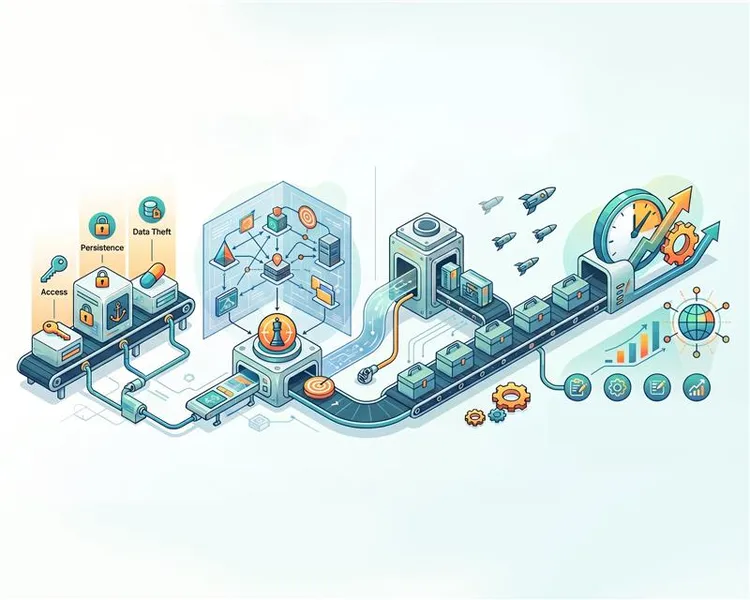
Cybercrime is no longer what it used to be. The image of a lone hacker working in isolation has largely been replaced by something far more structured and sophisticated. As explored in “Black Hat Hackers Explained: Inside the Underground Cybercrime Ecosystem,” black hat hackers operate within a complex network of tools, platforms, and communities. But today, that ecosystem has evolved even further. Black hat hackers are no longer just participants in underground activity; they are part of highly organized operations that function with speed, coordination, and scale.
From Individuals to Organized Operations
In the past, cyberattacks were often carried out by individuals or small groups with specific technical skills. While those actors still exist, the landscape has shifted toward more coordinated efforts. Modern black hat groups operate more like structured teams. Different roles are assigned across the attack lifecycle, from initial access to data extraction and monetization. This level of organization allows them to move faster and execute more complex attacks. It also makes it more difficult for them to stop.
The Rise of Specialized Roles
One of the most significant changes is the level of specialization within cybercrime operations. Instead of a single actor managing every step, different individuals or groups focus on specific tasks.
Some focus on gaining initial access, others on maintaining persistence, and others on extracting or exploiting data. This division of responsibility increases efficiency and reduces the likelihood of failure at any single point. It also enables attackers to scale their operations beyond what individuals could achieve alone.
Tools That Lower the Barrier to Entry
Another factor driving this shift is the availability of advanced tools. Many of the capabilities that once required deep technical expertise are now accessible through ready-made solutions. Automation, pre-built attack kits, and shared resources allow attackers to execute sophisticated campaigns with less effort. This not only increases the number of potential attackers but also standardizes how attacks are carried out. As a result, cybercrime becomes more consistent and more scalable.
Coordination at Speed
Modern black hat operations are designed for speed. Attacks are no longer isolated events but coordinated activities that can unfold rapidly across multiple systems. Once access is gained, the next steps are often executed quickly, with minimal delay. Data can be located, extracted, and moved before organizations have time to detect or respond. This level of coordination reflects a shift toward more operational discipline within cybercrime groups.
Why This Makes Threats More Dangerous
The growing organization of black hat hackers increases both the frequency and impact of attacks. With structured processes and specialized roles, these groups can target more organizations and adapt more quickly to defenses. They are also better equipped to exploit weaknesses across different environments, from cloud platforms to endpoints and user behavior. This makes cybersecurity less about defending against isolated incidents and more about preparing for continuous, evolving threats.
Staying Ahead of an Evolving Threat
The evolution of black hat hackers reflects a broader trend in cybersecurity: threats are becoming more structured, more scalable, and more persistent. Understanding this shift is critical for organizations that want to stay ahead. It is no longer just about knowing who the attackers are, but how they operate and why their methods are changing. With the right awareness and strategy, businesses can better prepare for this new reality, where cybercrime is not random but organized and constantly evolving.
Through Terrabyte, organizations can explore modern security approaches that are designed to address today’s more structured and coordinated threat landscape.