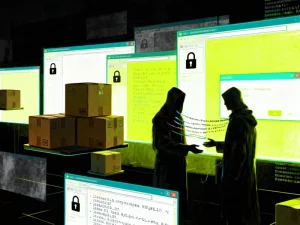

Downtime today is no longer a simple operational inconvenience. In an era where cyber threats continue to evolve in silence and sophistication, every unexpected outage becomes a potential warning sign. What initially appears to be a system failure may instead be the first stage of a coordinated cyberattack, one that hides behind operational disruption while probing weaknesses. Organizations can no longer afford to assume downtime is harmless.
In the previous article, “Downtime or Cyberattack? How to Tell the Difference”, we explored how outages may signal suspicious activity. The landscape has since grown even more complex. Attackers now use downtime, whether accidental or engineered, as an opportunity to infiltrate systems, disguise malicious actions, or prepare for a larger assault.
What makes these incidents particularly dangerous is how closely they mimic legitimate technical issues. A simple restart, a network slowdown, or a temporary service glitch may actually be masking unauthorized access attempts or internal compromise. Many organizations only discover the true cause long after recovery, when the damage has already occurred.
When an Outage Becomes the Attacker’s Advantage
Downtime provides attackers with a unique window of opportunity. Teams are focused on restoring operations, customer communication becomes reactive, and monitoring systems may be temporarily disrupted. This combination creates the perfect environment for intrusions that remain unnoticed.
Attackers may intentionally trigger outages to distract technical teams, or they may wait for natural downtime events to exploit weakened defenses. In both scenarios, the threat hides behind the chaos. Even after systems recover, subtle signs of compromise, unusual access behaviors, configuration changes, or delayed malicious activity, often emerge only later, when the organization is no longer expecting danger.
The Risk That Continues After Recovery
One of the biggest misconceptions is believing the threat ends when uptime returns. Recovery can actually mark the beginning of the attacker’s real objective. During the restoration process, systems reboot, controls shift, and monitoring gaps open temporarily. This moment of transition provides attackers with opportunities to escalate access, move laterally within networks, or activate previously planted malware.
Organizations frequently miss these signals because the priority naturally shifts from investigation to stabilization. But attackers count on this shift. Their strategy is to blend into normal operations, appearing harmless until they strike when the environment is most vulnerable.
Strengthening Your Approach to Suspicious Downtime
In today’s landscape, downtime should never be treated as a purely technical event. A security-first mindset is essential, not only during the disruption but also in the hours and days that follow. Treating every outage as a potential threat enables quicker detection of hidden risks, reduces exposure, and ensures attackers cannot conceal their actions behind normal maintenance or unexpected system behavior.
This approach requires collaboration between operations and security teams, stronger visibility across system behaviors, and clear protocols for verifying integrity before fully returning to normal operations. Most importantly, it requires accepting the possibility that downtime is not just an incident, but a sign.
Preparing for a Future Where Every Outage Matters
The line between technical issues and cyberattacks continues to blur. As attackers leverage downtime more strategically, organizations must adapt with sharper awareness, stronger detection, and a more cautious approach to every operational disruption. Recognizing downtime as a potential threat is not paranoia; it is modern defense.
At Terrabyte, we help organizations strengthen incident readiness, enhance visibility during operational disruptions, and detect threats that may emerge during or after downtime, ensuring resilience in an increasingly unpredictable environment.