
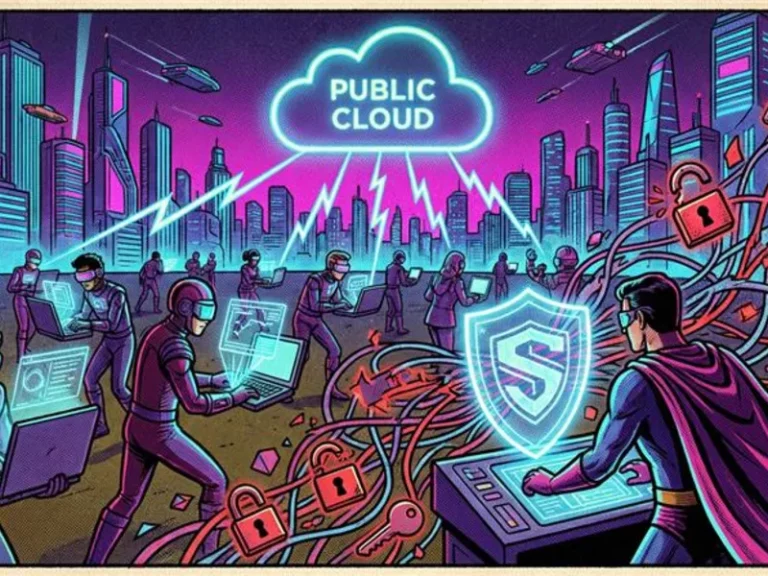
Public cloud was once considered a space managed primarily by IT teams. Access was limited, environments were controlled, and responsibility was clearly defined. Today, reality has changed. Modern organizations rely on public cloud platforms to support everything from daily operations to strategic initiatives. Employees access cloud applications from anywhere; partners collaborate through shared systems, and third-party services integrate directly into core workflows. In this environment, access is no longer limited; it is everywhere.
When Access Expands Beyond IT
The biggest shift in public cloud security is not technological, but operational. Cloud environments are no longer used by a small group of administrators. They are accessed by a wide range of users across different roles, departments, and even organizations. Business teams generate reports directly from cloud dashboards. External vendors connect to internal systems for collaboration. Applications communicate with each other through APIs without human intervention. This level of accessibility improves efficiency, but it also increases exposure. The more people and systems that can access the cloud, the harder it becomes to maintain consistent control.
The Rise of Legitimate Risk
One of the most important changes in public cloud security is the nature of risk itself. Threats are no longer limited to external attackers trying to break in. In many cases, risk comes from legitimate users with valid access.
An employee may unintentionally expose sensitive data while sharing information. A partner may access more than necessary due to overly broad permissions. An application may interact with data in ways that were not fully anticipated. These are not traditional security incidents. They are the result of normal activity in a highly connected environment. This makes it harder for them to detect and even harder to prevent.
The Challenge of Visibility
With so many users, applications, and connections involved, maintaining visibility has become a major challenge. Organizations may know who has access to their cloud systems but understanding how that access is being used is far more complex.
Without clear visibility, it becomes difficult to answer critical questions:
- Who is accessing sensitive data right now?
- From where, and under what conditions?
- Is access aligned with normal behavior?
When these questions cannot be answered in real time, risk increases.
Rethinking Public Cloud Security
To adapt to this new reality, organizations need to rethink how they approach public cloud security. The focus must shift from controlling environments to controlling access in context. Security should not assume that users or systems are safe simply because they have been granted access. Instead, every interaction should be evaluated based on identity, behavior, and context. This approach allows organizations to maintain control even when access is widely distributed.
Moving Forward with Confidence
Public cloud adoption will continue to grow, and with it, the number of users and systems interacting with sensitive data. The challenge is not to restrict access entirely, but to manage it intelligently.
Organizations that succeed will be those that recognize access as both an enabler and a risk and build their security strategies accordingly. By focusing on context, visibility, and continuous control, they can create a security approach that aligns with how modern cloud environments operate.
With the right strategy in place, businesses can embrace the flexibility of public cloud without losing control over their data and operations. Through Terrabyte, organizations can explore modern approaches to public cloud security that are designed to support both agility and protection in today’s dynamic digital landscape.