
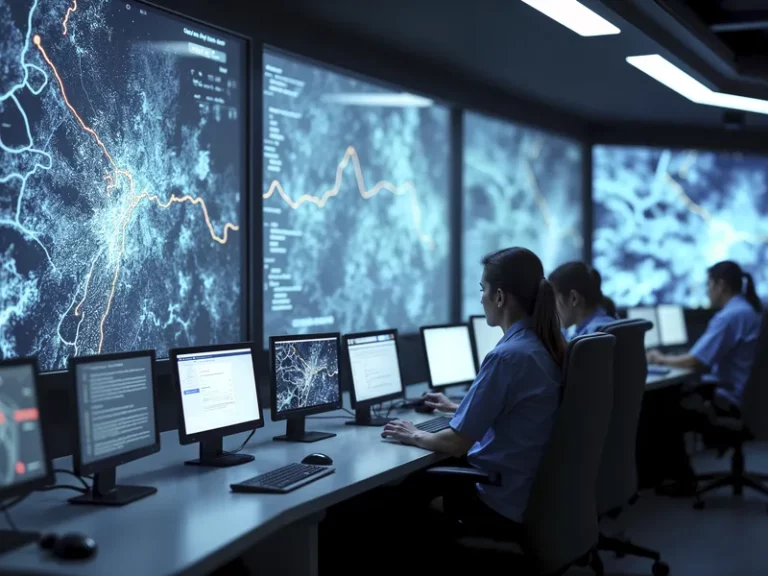
Cybersecurity has moved far beyond basic firewalls and signature-based detection. For experienced professionals, today’s challenge is not understanding threats, but staying ahead of adversaries who are faster, automated, and strategically adaptive. As organizations adopt cloud-native architectures, AI-driven operations, and interconnected digital ecosystems, cybersecurity experts now demand precision, intelligence, and continuous evolution.
Sophisticated attack chains, hybrid infrastructures, and regulatory pressure shape modern security environments. Expertise is no longer measured solely by tools, but by how well security leaders anticipate risk, integrate intelligence, and align security with business resilience.
Why Advanced Cybersecurity Requires a New Mindset
Experienced practitioners understand that threats rarely arrive as isolated events. Attacks unfold across endpoints, identities, applications, and data layers, often exploiting blind spots between systems. Traditional perimeter-focused defenses struggle in environments where assets are dynamic, and trust is fluid.
For experts, cybersecurity becomes a strategic discipline. It requires deep visibility, contextual analysis, and the ability to correlate signals across diverse platforms. Defense is no longer reactive; it is predictive, adaptive, and continuously tested against evolving threat behaviors.
The Evolving Threat Landscape Experts Must Address
Advanced attackers operate with patience and precision. They leverage automation, AI, and supply chain weaknesses to bypass conventional controls. Threat actors increasingly blend cybercrime tactics with nation-state techniques, creating attacks that are stealthy, persistent, and difficult to attribute.
Experts must account for risks such as lateral movement across cloud workloads, identity-based attacks that evade endpoint detection, and manipulation of trusted systems through misconfigurations or compromised integrations. In this environment, security decisions must be driven by real-time intelligence rather than static assumptions.
From Tool Management to Security Orchestration
As security stacks grow, complexity becomes a risk in itself. Experts face the challenge of managing multiple platforms while maintaining operational clarity. The focus shifts from deploying more tools to orchestrating them effectively.
Before adopting advanced controls, organizations must align detection, response, and governance into a cohesive strategy. Automation, behavioral analytics, and AI-assisted decision-making play a critical role in reducing noise, prioritizing threats, and accelerating response without sacrificing control.
Expert-Level Cybersecurity Is About Resilience
At an advanced level, cybersecurity success is measured not by the absence of incidents but by the ability to withstand and recover from them. Experts design systems that assume compromise, limit blast radius, and maintain operational continuity under attack.
This resilience-driven approach integrates security into architecture, processes, and culture. It ensures that when incidents occur, organizations respond decisively, learn quickly, and emerge stronger rather than disrupted.
The Future of Cybersecurity Expertise
As digital transformation accelerates, cybersecurity expertise will continue to evolve from technical mastery to strategic leadership. Experts will be expected to guide organizations through risk-based decision-making, regulatory complexity, and the responsible use of emerging technologies like AI.
Cybersecurity experts are no longer just about defending systems; it is about enabling trust, protecting innovation, and sustaining business in an increasingly hostile digital world.
Terrabyte supports organizations with advanced cybersecurity strategies designed to address complex threats, integrate intelligent defense, and build long-term digital resilience.