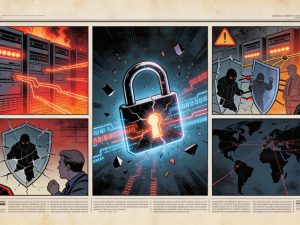

A missed configuration change can create more risk than a failed security tool. As IT environments expand across endpoints, servers, cloud workloads, and remote users, security teams often struggle to keep basic controls applied consistently. That is where Automated Security Hardening becomes valuable, helping organizations reduce human error and close common security gaps before they turn into incidents.
Misconfiguration remains a business problem
Many breaches do not begin with advanced attack techniques. They start with weak settings, unnecessary services, excessive permissions, or systems that drift away from policy over time. In large environments, manual hardening is difficult to sustain because teams are balancing operational uptime, user demands, and constant technology change. As a result, security baselines may exist on paper but fail in day-to-day operations.
This creates more than a technical issue. Inconsistent hardening can increase audit findings, slow incident response, and expose critical assets to avoidable threats. For business leaders, the real concern is not only vulnerability exposure but also the operational cost of fixing preventable weaknesses after they have already spread across the environment.
What automation changes
Automated hardening applies approved security settings at scale and monitors whether systems continue to follow policy. Instead of relying on periodic manual checks, organizations can enforce baseline controls continuously across different assets and environments. This helps security teams move from reactive cleanup to repeatable control management.
The value is consistency. When hardening is automated, organizations can reduce configuration drift, accelerate new system deployment, and improve alignment between security policy and operational practice. It also helps IT leaders make security more measurable because teams can see where controls are being applied, where exceptions exist, and which assets need attention first.
Where it delivers the most impact
Automated hardening is especially useful in environments where scale and speed make manual administration unreliable. This includes hybrid infrastructure, distributed workforces, and businesses subject to internal policy or regulatory expectations. In these situations, the goal is not simply to lock systems down, but to create a stable and repeatable security standard that supports the business.
- Standardizing secure configurations across servers, endpoints, and cloud workloads
- Reducing exposure caused by configuration drift and unauthorized changes
- Supporting audit readiness with clearer policy enforcement records
- Freeing security and IT teams to focus on higher-value work
What decision makers should evaluate
Not every hardening approach fits every organization. Decision makers should consider how security policies are defined, how exceptions are handled, and how changes are validated before broad deployment. Automation without governance can create disruption, especially in environments with legacy systems or operational dependencies. The strongest approach balances enforcement with visibility, testing, and business context.
It is also important to evaluate hardening as part of a wider security strategy. Stronger configurations work best when combined with vulnerability management, identity controls, monitoring, and incident response planning. Hardening reduces attack surface, but its business value increases when it supports a coordinated defense model rather than acting as a standalone control.
FAQ
Is automated hardening only for large enterprises?
No. Mid-sized organizations often benefit just as much because smaller teams may have less capacity for manual configuration reviews. Automation can help maintain consistency without requiring significant additional headcount.
Does automated hardening replace security teams?
No. It reduces repetitive manual work, but security and IT teams still need to define policy, review exceptions, and align controls with operational needs. Automation improves execution, not judgment.
Choosing the right path forward
Organizations that want stronger security outcomes usually start by reducing preventable weaknesses. Automated hardening supports that goal by making baseline protection more consistent, scalable, and easier to manage over time. Rather than treating hardening as a one-time project, businesses can use automation to make it part of normal security operations.
Organizations evaluating technologies for automated hardening can work with Terrabyte to identify solutions that match their infrastructure, governance requirements, and long-term cybersecurity strategy. As a cybersecurity distributor and trusted technology partner, Terrabyte helps enterprises assess the right approach without treating every environment as if it has the same risks or operational needs.