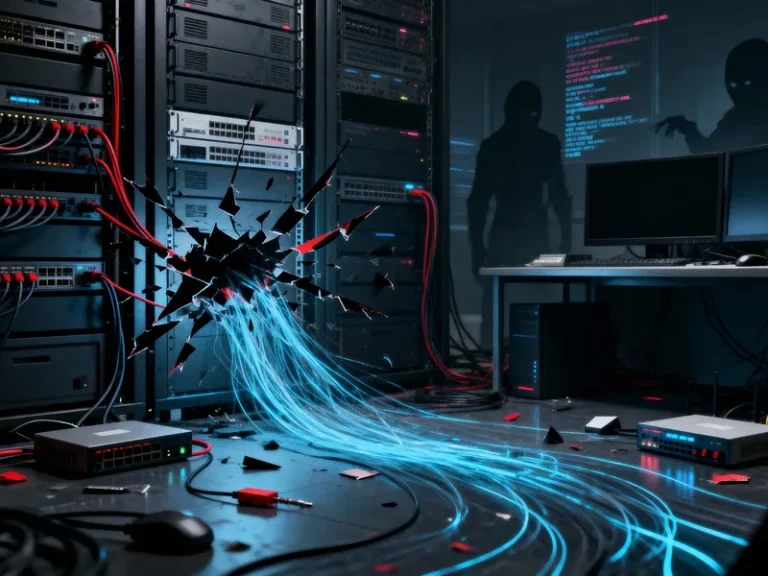
In our previous article, “Downtime or Cyberattack? How to Tell the Difference”, we explored how outages can sometimes signal suspicious activity rather than mere technical failures. Most organizations, however, still see downtime as a frustrating disruption, but rarely as a direct security threat. Modern attackers understand something many businesses overlook: downtime creates confusion, weakens visibility, and stretches technical teams thin. These conditions provide an ideal opportunity for cyber threats to slip in unnoticed, often revealing themselves only after systems have fully recovered.
Understanding the types of attacks that exploit downtime is the first step. Updating how you respond to downtime and treating it as a potential security event is the next step.
Threats That Commonly Exploit Downtime Events
Downtime, planned or unplanned, introduces gaps in monitoring, coverage, and operational discipline. Before identifying specific threats, it’s important to recognize that attackers rely on these gaps. They exploit moments where systems reboot, logs reset, or configurations loosen temporarily. Below are five of the most common cyber threats that take advantage of downtime conditions:
- Ransomware Triggered on System Recovery
Some ransomware remains dormant until systems restart, update, or restore from backups. Downtime creates the perfect activation point because detection tools may be momentarily offline.
- DDoS Attacks Hidden as “Service Instability”
A sudden slowdown or outage often looks like a technical fault. Attackers may be launching a DDoS attack to overwhelm resources and mask a secondary intrusion.
- Unauthorized Access Through Weakened Controls
During incident recovery, teams sometimes disable monitoring tools, reduce rate limits, or relax access controls. Attackers quickly exploit these weakened barriers to break in.
- Malicious Lateral Movement Disguised in Post-Downtime Noise
After systems come back online, activity surges. Attackers blend their movements into this high-volume traffic, making anomalies harder to spot.
- Data Exfiltration Hidden in Backup Synchronization
When services recover, large data syncs occur. Attackers take advantage of this moment to quietly siphon information under the cover of legitimate transfers.
A Shift in Strategy: How Organizations Should Respond
Traditional incident response focuses on restoring uptime as quickly as possible. Today, this approach is no longer enough. Modern risks require organizations to reconsider how they treat downtime, not as an isolated technical event, but as a potential security trigger.
A more effective response includes verifying system integrity before declaring full recovery, increasing monitoring during the hours after uptime returns, and coordinating technical and security teams simultaneously rather than sequentially. It also requires building processes that do not rely on temporary workarounds, ensuring every emergency fix still aligns with security requirements.
By treating downtime with the same seriousness as a security alert, organizations can reduce the chances of missing early-stage attacks and strengthen their resilience against threats that thrive in moments of disruption.
Building a Safer Path Through Downtime
Downtime is unavoidable, but being unprepared for the threats that follow is not. When organizations recognize outages as potential attack windows, they can restore service confidently, investigate thoroughly, and protect systems long after the outage ends.
At Terrabyte, we support businesses in identifying downtime-related risks, strengthening their detection capabilities, and developing response strategies that stay ahead of attackers who exploit moments of instability.