
In a previous article, “What Is a Security Classification Guide and Why Every Business Needs One,” we discussed how data classification provides clarity, structure, and control over sensitive information. That foundation remains critical, but the environment around it has changed dramatically.
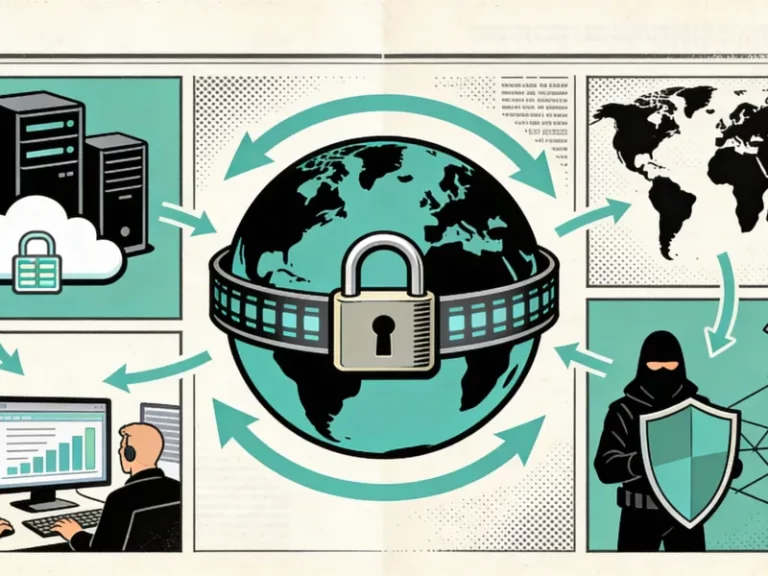
Today, data no longer sits quietly inside office networks or internal servers. It moves across cloud platforms, collaboration tools, personal devices, and remote connections. As organizations embrace cloud-first strategies and distributed workforces, security classification must evolve from a static policy into a living, adaptive framework.
Why Cloud and Remote Work Change Everything
Cloud computing and remote work fundamentally reshape how data is accessed, shared, and stored. Employees collaborate in real time across geographies; third-party vendors integrate directly into systems, and files are constantly synchronized across platforms.
This level of flexibility introduces new risks. Traditional security classification models were designed for controlled, on-premises environments. In cloud and remote settings, those assumptions no longer apply. Without adaptation, even well-defined classification policies can fail to prevent exposure.
The New Risks of Unclassified Cloud Data
When security classification does not align with cloud usage, organizations face visibility gaps and inconsistent controls. Sensitive information may be treated the same as public data simply because systems cannot distinguish risk levels automatically.
These risks are amplified by human behavior. Remote workers often prioritize speed and convenience, unintentionally bypassing security measures. Over time, this creates a dangerous disconnect between policy and practice. Without cloud-aware classification, organizations lose control over their most valuable digital assets.
How Security Classification Must Evolve in the Cloud
In cloud and hybrid environments, security classification must become dynamic rather than static. Labels alone are no longer enough; classification should actively influence how data is handled, accessed, and protected.
Modern classification frameworks should integrate directly with cloud platforms, identity systems, and security controls. This allows organizations to enforce protection automatically, even when users work remotely or systems scale rapidly. Effective cloud-ready classification should be:
- Context-aware, adjusting controls based on user role, location, and device
- Integrated with access management and encryption technologies
- Enforced consistently across cloud services and collaboration tools
- Flexible enough to support rapid business changes without weakening security
Security Classification and Zero Trust Principles
Cloud adoption often goes together with Zero Trust strategies. In this model, no user or system is automatically trusted, regardless of location. Security classification plays a critical role in defining how trust decisions are applied to data itself.
When data is clearly classified, security systems can make smarter decisions, limit access, require additional verification, or apply stronger encryption automatically. This ensures that sensitive data remains protected even in highly distributed environments.
Building a Resilient Classification Strategy for the Future
As cloud ecosystems grow more complex, security classification must be designed for scale and resilience. Policies should be clear but also supported by automation and continuous monitoring.
Organizations that succeed treat classification as a strategic capability rather than a compliance checkbox. They align people, processes, and technology to ensure data protection follows information wherever it goes. Terrabyte continues to help organizations adapt to cybersecurity foundations for cloud-driven environments, ensuring security classification remains effective, actionable, and future-ready.